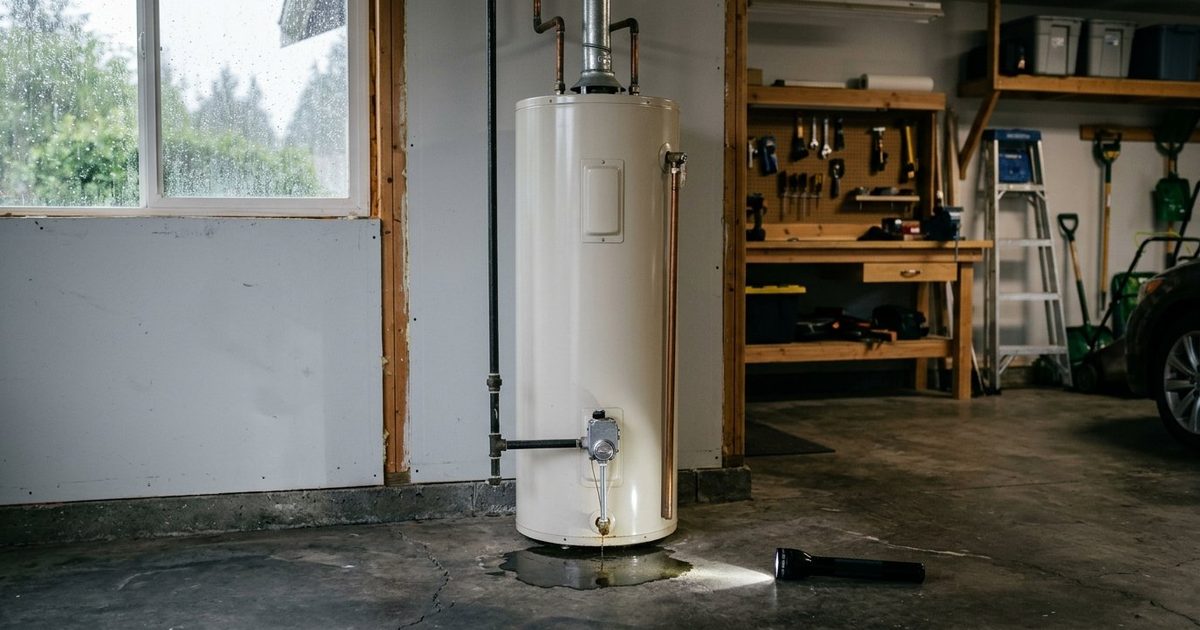
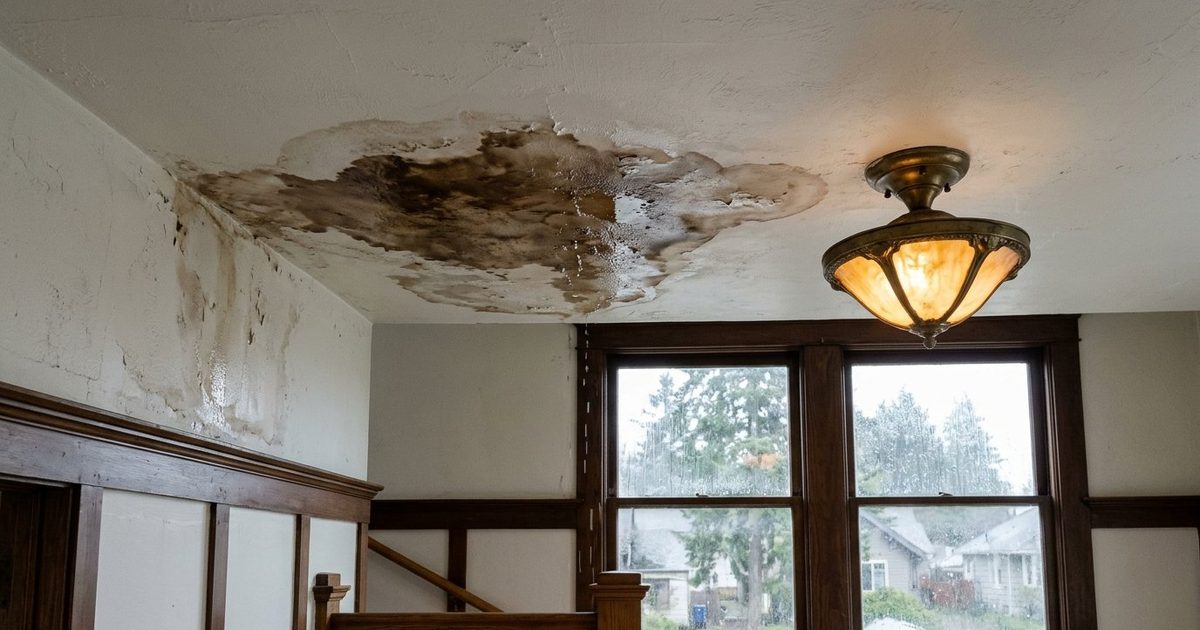
The clearest signs of a hidden water leak are a water bill that climbs while your use stays the same, a water meter that keeps moving when every tap is off, and damp, stained or warm spots on walls, ceilings or floors. If you see any of these in your Tacoma home, a simple meter test tells you whether water is escaping, and leak detection finds where.
Why Hidden Leaks Cost More Than They Look
A drip you can see gets fixed. A leak inside a wall, under a floor or out in the yard can run for weeks before anyone notices.
The water itself adds up. The U.S. Environmental Protection Agency's WaterSense program says household leaks can waste more than 9,300 gallons of water every year in the average home, and that nine percent of homes have leaks wasting 50 gallons or more per day.
The bigger cost is usually the damage. Water soaks into subfloors, framing and insulation. It stains ceilings and feeds mold. By the time a stain shows up, the wood behind it may have been wet for a long time. Finding the leak early keeps the repair small.
Signs of a Hidden Leak Inside the House
Hidden leaks leave clues. You may notice one of these long before you see water.
- A water bill higher than usual. If nothing about your household changed but the bill went up, water may be leaking out of sight. Compare against the same billing period last year if you can.
- The sound of running water. Hissing, trickling or dripping inside a wall when nothing is on often means a supply line is leaking.
- Stains or bubbling paint. Yellow or brown rings on a ceiling, or paint that bubbles and peels, often sit right below a bathroom or a pipe run.
- Soft or warped floors. Flooring that lifts, cups or feels spongy near a bathroom, kitchen or laundry can mean water is getting underneath.
- Warm spots on the floor. A warm patch on tile or concrete can point to a hot water line leaking under a slab.
- A musty smell. A damp, earthy smell in one room, a closet or a cabinet often comes before any visible water.
- Mold or mildew in odd places. Mold on a wall far from the shower, or along a baseboard, is worth a closer look.
- Low water pressure at one fixture or across the house. Water escaping before it reaches the tap can drop pressure.
Signs of a Leak Outside or Under the House
Many Tacoma homes have crawlspaces and long service lines running from the meter to the house. Leaks there are easy to miss.
- A soggy patch of lawn that never dries, even after a few dry days.
- A sunken spot or a small sinkhole along the line between the meter and the house.
- Standing water or wet soil in the crawlspace, or a vapor barrier with water pooled on top.
- Grass that stays greener in one strip than the rest of the yard in late summer.
Our wet South Sound winters make outdoor leaks harder to spot, because the whole yard is damp from October to spring. That is why the meter test below matters. It works in any weather.
How to Check Your Water Meter for a Leak
You can do this in a couple of hours, and it tells you whether water is leaving your plumbing somewhere.
- Turn off every tap and water-using appliance. That includes the dishwasher, washing machine, ice maker, sprinklers and anything else that draws water. Make sure no toilets are refilling.
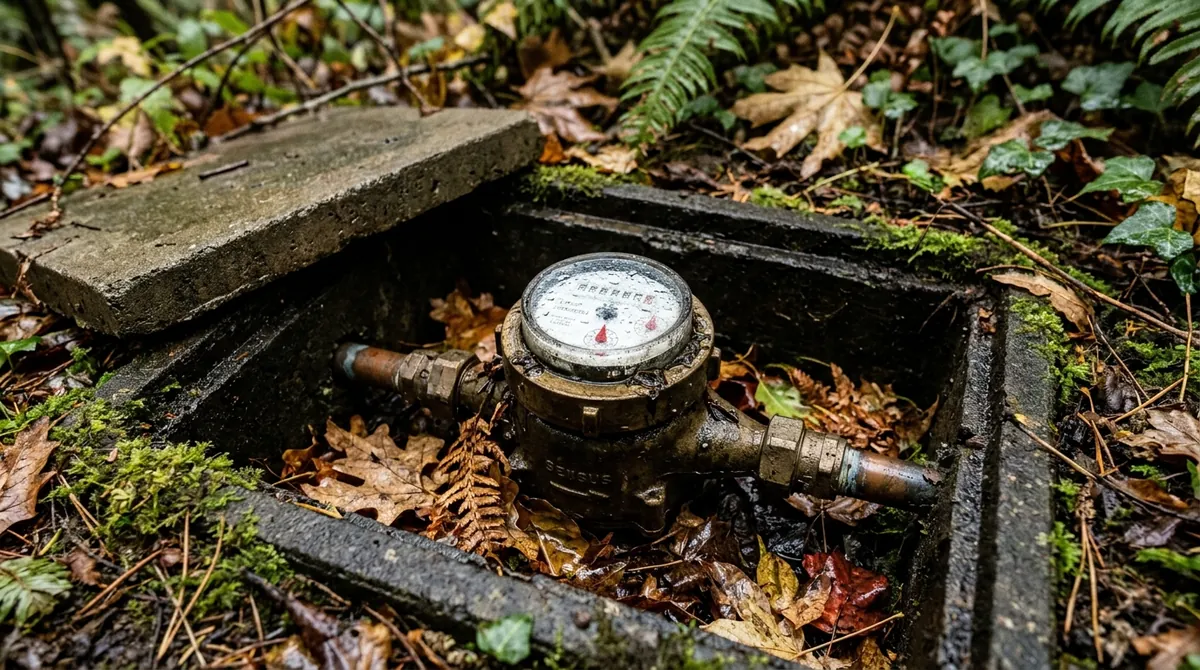
- Find your water meter. In most Tacoma neighborhoods it sits in a concrete or plastic box near the street or sidewalk. Lift the lid carefully.
- Look at the small leak indicator. Many meters have a small triangle, star or dial that spins with even a tiny flow. If it is moving with everything off, water is escaping.
- Write down the reading and wait. If your meter has no indicator, note the full reading, wait two hours without using any water, then read it again. That is the window the EPA's WaterSense program suggests. Any change means a leak.
- Check the toilets. A few drops of food coloring in each tank will show up in the bowl within 10 minutes, without flushing, if the flapper is leaking. A running toilet is one of the most common causes of a high bill, and it is easy to fix.
If the toilets pass and the meter still moves, the leak is somewhere in the supply lines, inside the walls, under the floor or in the yard. That is where professional leak detection comes in.
Things That Look Like a Leak but Are Not
Not every damp spot is a plumbing leak. Before you assume the worst, rule these out.
- Condensation on cold pipes. In humid weather, cold water lines can sweat and drip. The water is real, but the pipe is fine. Insulating the pipe usually solves it.
- Roof or window leaks. A ceiling stain that only grows during heavy rain, and sits under the roof rather than under a bathroom, often points to the roof or flashing. That is a job for a roofer, not a plumber.
- Wind-driven rain at siding or doors. Water at the bottom of an exterior wall after a storm usually comes from outside.
- A spill or overflow. A tub that overflowed once can leave a ceiling stain that never grows again.
The meter test separates these from a true supply leak. If the meter is still and the stain only shows up after rain, the problem is probably not your plumbing.
What Professional Leak Detection Looks Like
Guessing at a hidden leak means opening walls and floors in the wrong place. Leak detection finds the source first, so the repair is smaller.
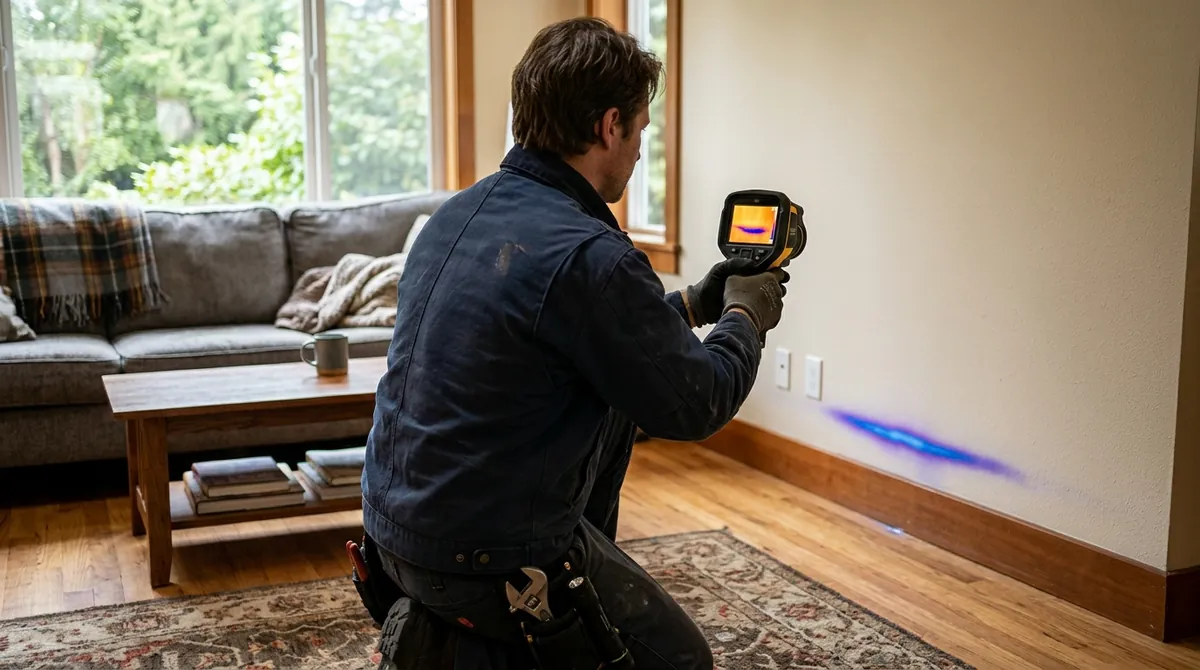
When we come out, we start by confirming at the meter that water is escaping. Then we narrow it down with non-invasive tools, including thermal imaging, which shows cooler or warmer areas where water is moving behind a wall or under a floor. Once we know where the leak is, we open only what we need to reach it.
You get an upfront, flat-rate price for the repair before any work begins. Our $49 diagnostic fee is waived when you approve the repair. You can read more on our leak detection service in Tacoma page.
What Happens After the Leak Is Found
The fix depends on what failed and where.
- A single failed fitting or section of pipe inside a wall or floor is usually repaired on its own, with only a small opening.
- A leaking service line in the yard may need a section repaired or the whole line replaced. If the line is old or has leaked more than once, our water line replacement service covers the options, including trenchless methods where they fit.
- Old piping that keeps failing, such as aging galvanized steel or early plastic lines, may be better replaced as a whole. Our whole-house repiping page explains when that makes sense.
- A leak that is actively spraying or flooding needs the main shutoff closed right away. Then call us. See our emergency plumbing page for what to do while you wait.
Questions to Ask Before You Hire Anyone for Leak Detection
- How will you confirm there is a leak before looking for it? A meter check should come first.
- What tools will you use to find it? Ask whether they can locate it without opening walls first.
- How much will you need to open up? A good locate means a small opening, not a wall torn out.
- What will the repair cost once you find it? Ask for the price before work begins.
- Will you check for related damage? Wet framing or insulation should be pointed out so you can deal with it.
Leaks in Tacoma Homes
Tacoma's housing stock spans more than a century, and the plumbing inside reflects that. Older homes in the North End, Hilltop and Stadium District may still have galvanized steel pipe that corrodes from the inside. Mid-century homes across South Tacoma and the East Side often have long supply lines running through crawlspaces, where a slow leak can drip for months without anyone going down to look.
Cold snaps add another risk. When temperatures drop below freezing, pipes in crawlspaces, exterior walls and unheated garages can crack. The leak often shows up only after the thaw. If we have had a hard freeze, it is worth running the meter test even if nothing looks wrong.
Think You Have a Hidden Leak?
If your bill has jumped, your meter moves with everything off, or you have found a stain you cannot explain, call Rooter-Man Plumbing of Tacoma at (253) 600-1335 or send us a message. We will confirm the leak, find it without guesswork, and give you a flat-rate price for the repair before any work begins. Learn more about our leak detection services for Tacoma and the South Sound.