A sewer scope is a camera inspection of the pipe that carries waste from a house to the city sewer main, and it's worth booking before you close on any older home in Tacoma. A standard home inspection rarely looks inside that pipe, and in Tacoma the owner is responsible for it, so whatever is wrong with it becomes yours on closing day.
Below: who owns the sewer line in Tacoma, what a scope shows, how the visit works, what drives the price, and what to do with the results while you can still negotiate.
Who Owns the Sewer Line in Tacoma
The pipe from the house to the city main is called the side sewer. The City of Tacoma's Environmental Services team is clear about who looks after it: "Property owners are responsible for the maintenance of the side sewer from their building to the City's main sewer line." The city maintains the main itself.
That means a cracked clay side sewer under the front yard, or a root-filled joint near the street, is the homeowner's repair. Buy the house, and it's yours. A scope before closing is how you find out what you're buying.
Rules differ in other cities around the South Sound, so if the home is in Lakewood, Puyallup or another town, ask that city or utility where the owner's part ends.
What a Sewer Scope Shows
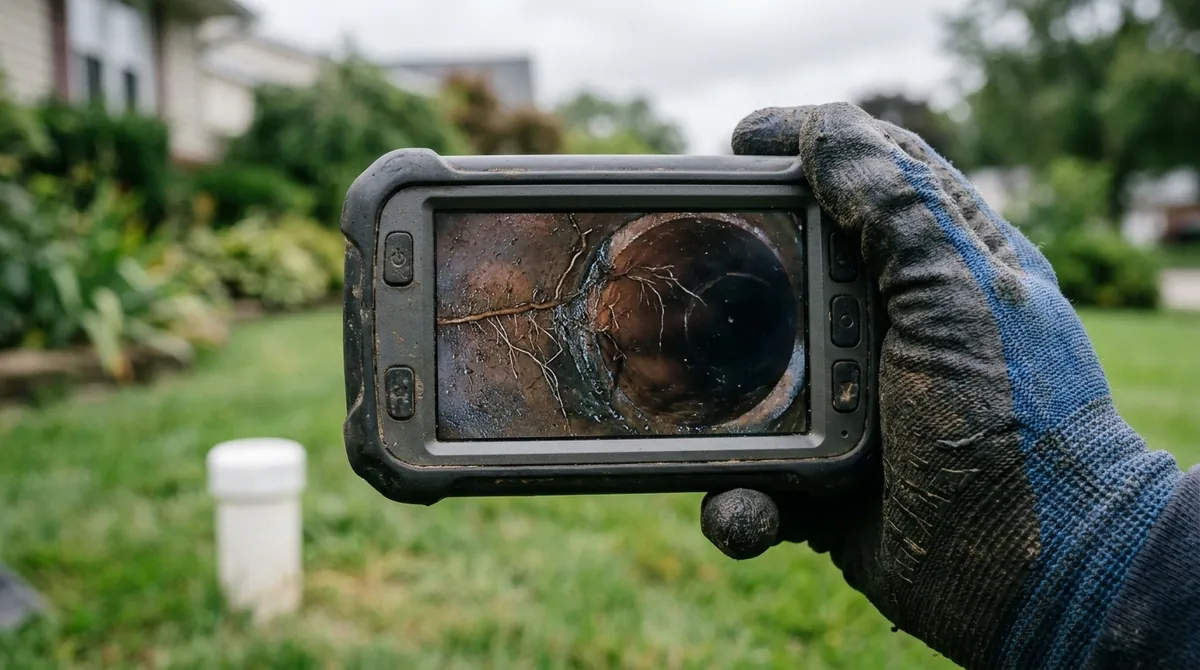
The camera rides on a flexible cable down the line while we watch a screen. You see what we see. Common findings in South Sound homes:
- Roots. Tree roots find their way into joints in older clay and concrete pipe, then grow and catch paper and grease.
- Cracks and breaks. Older pipe cracks with age, ground movement and root pressure.
- Sags (bellies). A low spot where the pipe has settled holds water and waste, so the line clogs again and again.
- Offset joints. Two pipe sections that have shifted apart, leaving a lip that catches debris.
- Old pipe material. Clay, concrete or cast iron that's near the end of its life, even with no break yet.
- Grease and buildup. A line that needs cleaning, not repair.
- A clean line. Plenty of scopes come back fine, and that's worth knowing too.
When we find a problem spot, a locator can pinpoint it from above, so we can mark where it is in the yard and how deep.
Which Homes Need a Scope Most
We suggest a scope before buying almost any resale home, but these raise the stakes:
- Older homes. Many early 1900s houses in the North End, Stadium District and Proctor still have original clay side sewers.
- Big trees near the line. Street trees and mature yard trees between the house and the street are the usual root source.
- Long runs to the street. Large lots and homes set far back mean more pipe that can fail, and a pricier repair if it does.
- Signs of past trouble. Fresh patches in the lawn or driveway, a cleanout cap that looks recently used, or a seller who mentions "a clog once."
- A vacant or flipped house. A line that sat unused for months can hide a problem that shows up as soon as a family moves in.
Newer homes can still have trouble, from construction debris in the line to a sag where the soil settled. A scope is quick insurance either way.
How a Sewer Scope Visit Works
Here is what happens when we come out to scope a home you're buying.
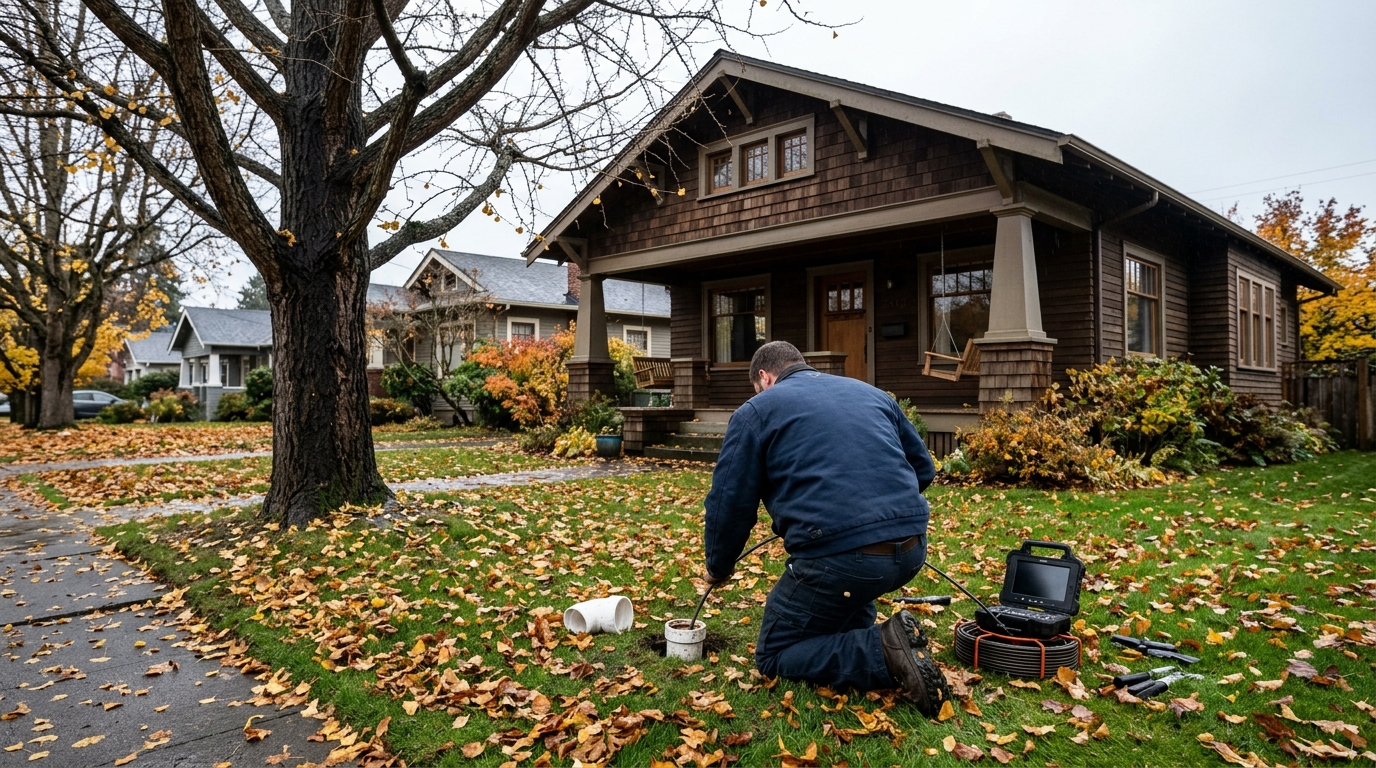
- We find the access point. Usually a cleanout near the foundation or in the front yard. If there's no cleanout, we may need another way in, such as pulling a toilet. Talk to the seller or their agent about access before the visit.
- We run the camera. It travels the length of the side sewer toward the city main while we watch the screen together and point out what we see.
- We locate and mark any problem spots. If something needs attention, we find it from above and mark where and how deep it is.
- We explain what we saw. What's fine, what can wait and what can't. If a repair is needed, you get a flat price for it, which is useful when you go back to the seller.
A standard camera inspection typically takes us 1 to 2 hours, depending on cleanout access and the length of the line. If the line is backed up, it needs clearing first so the camera can see, which usually brings the visit to 2 to 4 hours.
What a Sewer Scope Costs
Camera inspections are priced up front. You know the cost before we start, with no hidden fees. What changes the price:
- Cleanout access. A clear, easy cleanout keeps the job simple. No cleanout means more work to get in.
- Whether the line needs clearing first. A backed-up line needs drain cleaning before the camera can see anything.
- Length of the run. A long side sewer to the street takes more time to inspect and locate.
- Locating and marking. Finding and marking a problem spot in the yard adds a little time.
- Location and access. Crawlspaces, steep lots and tight spots can add work, and we price it first.
Compare that to what a scope can save. Sewer line repair or replacement is one of the bigger plumbing bills a homeowner can face, and our guide to trenchless sewer repair costs shows how much the method and length of pipe move that number. Finding it before closing gives you a choice. Finding it after move-in leaves you with the bill.
What to Do With the Results
What happens next depends on what the camera found.
- Clean line. Keep the notes with your home records. They're a useful baseline if a problem shows up years later.
- Buildup or light roots. Usually a cleaning job, such as cable cleaning or hydro jetting, not a repair. Worth knowing the cost before you close.
- A crack, sag or offset in one spot. Often a spot repair. Ask for a flat price for that repair so you have a real number.
- Old or failing pipe along much of the run. That's a sewer line repair or replacement, sometimes with trenchless options. Our guide on sewer line replacement explains the choices.
With a repair price in hand, you and your agent can ask the seller to fix it before closing, lower the price, or give a credit. We don't take sides in the deal. We show you the pipe and price the work.
Questions to Ask Whoever Scopes the Line
- Will you run the camera all the way to the city main? A partial scope can miss the section under the street side of the yard.
- Can I watch the screen with you? Seeing it yourself beats a summary.
- Will you locate and mark any problem you find? A mark in the yard turns a vague finding into a real repair price.
- If the line needs clearing first, is that priced before you start?
- If you find something, will you give me a flat price for the repair so I can take it to the seller?
Book a Sewer Scope With Rooter-Man
Buying a home in Tacoma or the South Sound? Call Rooter-Man Plumbing of Tacoma at (253) 600-1335 or send us a message to book a camera inspection before closing. A real person answers 24/7, and you get the price before we start. Learn more about our sewer camera inspection service for Tacoma, Puyallup, Lakewood and the rest of the South Sound.