Water line replacement cost in Tacoma depends mostly on four things: how long the line is from the meter to your house, how deep it is buried, whether we can pull the new line through two small access holes instead of digging a trench, and what is sitting on top of it. A short, shallow line under open lawn costs far less than a long run under a driveway and a row of old trees.
Below: the signs your water line is failing, which part of the pipe is yours in Tacoma, what moves the price, how the job works, and how to compare quotes.
What Is the Water Line, and Who Owns It in Tacoma?
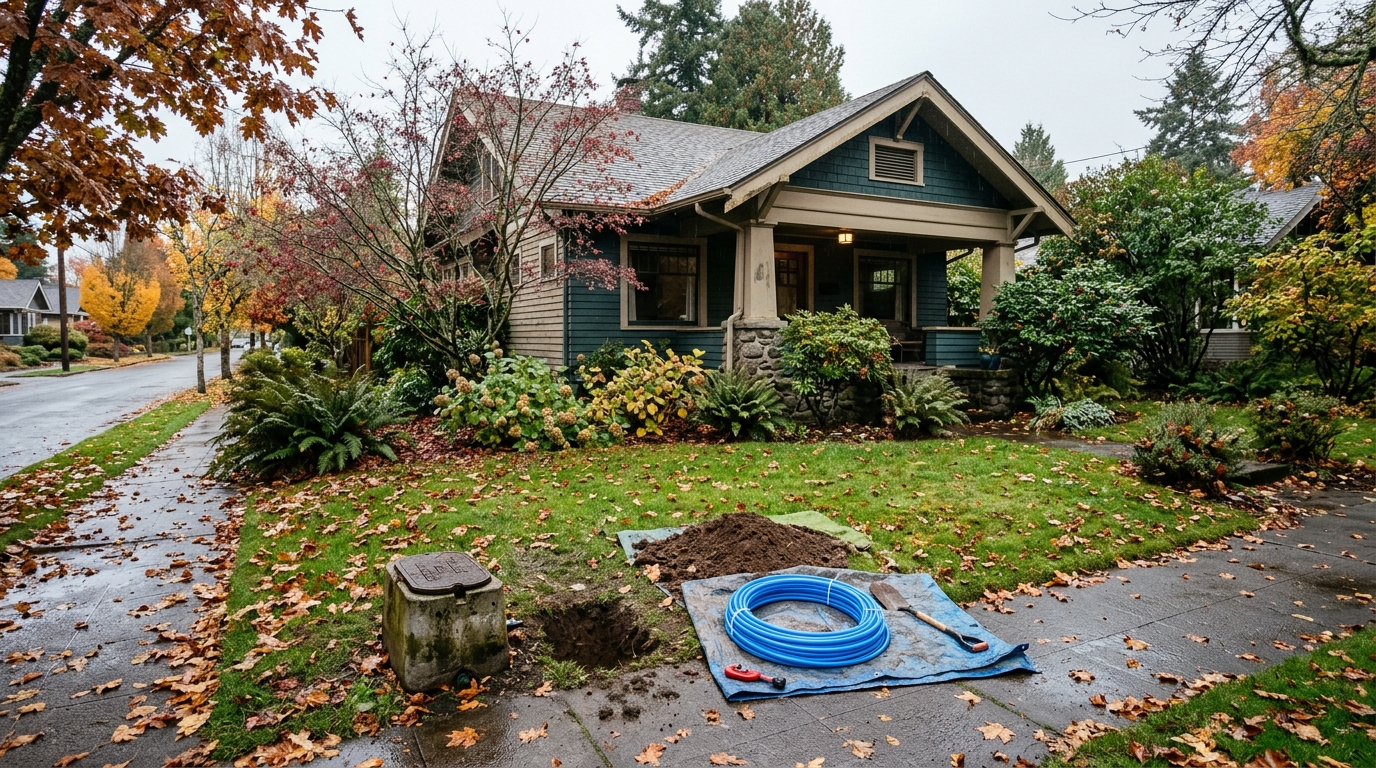
Your water line (also called the water service line) is the buried pipe that carries water from the meter to your house. Every drop you use runs through it. In most Tacoma neighborhoods the meter sits in a concrete box near the curb or sidewalk, so the line runs under your front yard, and sometimes under a walkway or driveway, to the house.
Tacoma Water draws the line at the meter. The utility owns the main and its side of the meter. On the other side, Tacoma Public Utilities puts it plainly: "You own and are responsible for the property-side service lines and plumbing." So when the pipe between the meter and your foundation cracks or corrodes, the repair is yours to arrange and pay for.
Outside Tacoma Water's area the rules can differ. The Lakewood Water District serves much of Lakewood, and Lakehaven Water and Sewer District serves much of Federal Way. If you're not sure where your part starts, ask your water provider. We can also help you find your meter and main shutoff.
Signs Your Water Line Is Failing
A water line is out of sight, so the clues show up inside the house, on the bill or in the lawn.
- Low pressure at every tap. If one faucet is weak, it's usually the faucet. If the whole house is weak, look at the main line.
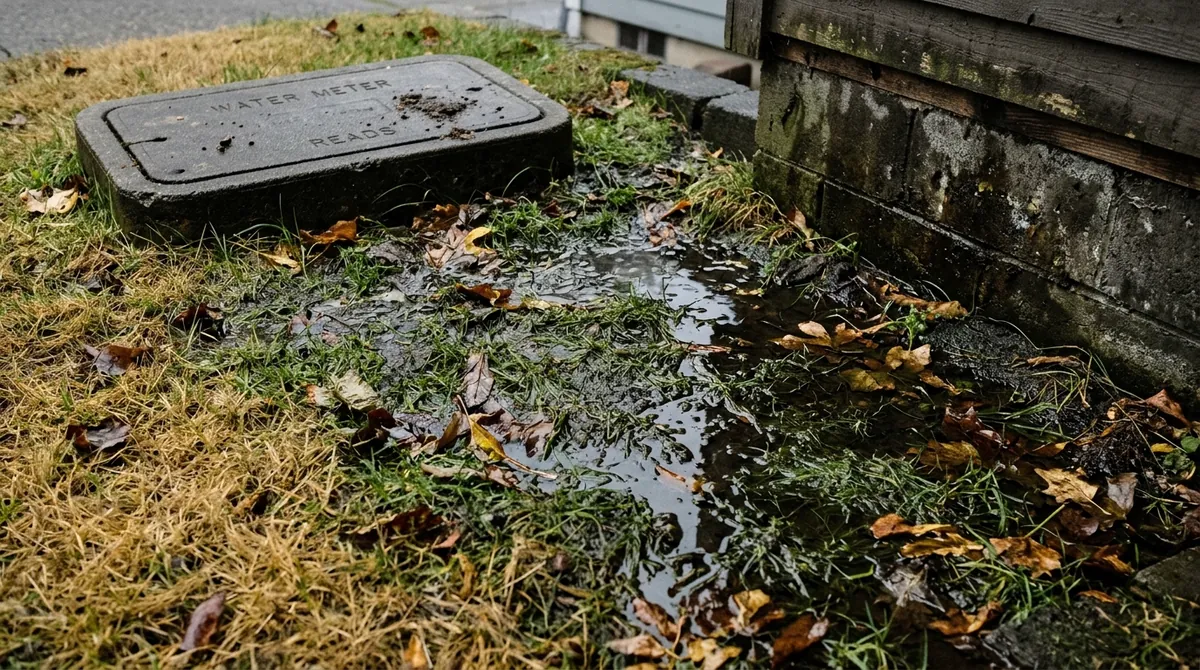
- A soggy spot in the yard. Wet grass between the meter and the house in a dry spell often means water is escaping underground. In a South Sound winter the soil is already soaked, so a leak can hide for weeks.
- A water bill that jumps with no change in how you use water.
- The meter moves with everything off. Turn off every tap and water-using appliance, then watch the meter. If the dial still moves, water is leaking somewhere, and the buried line is a common culprit.
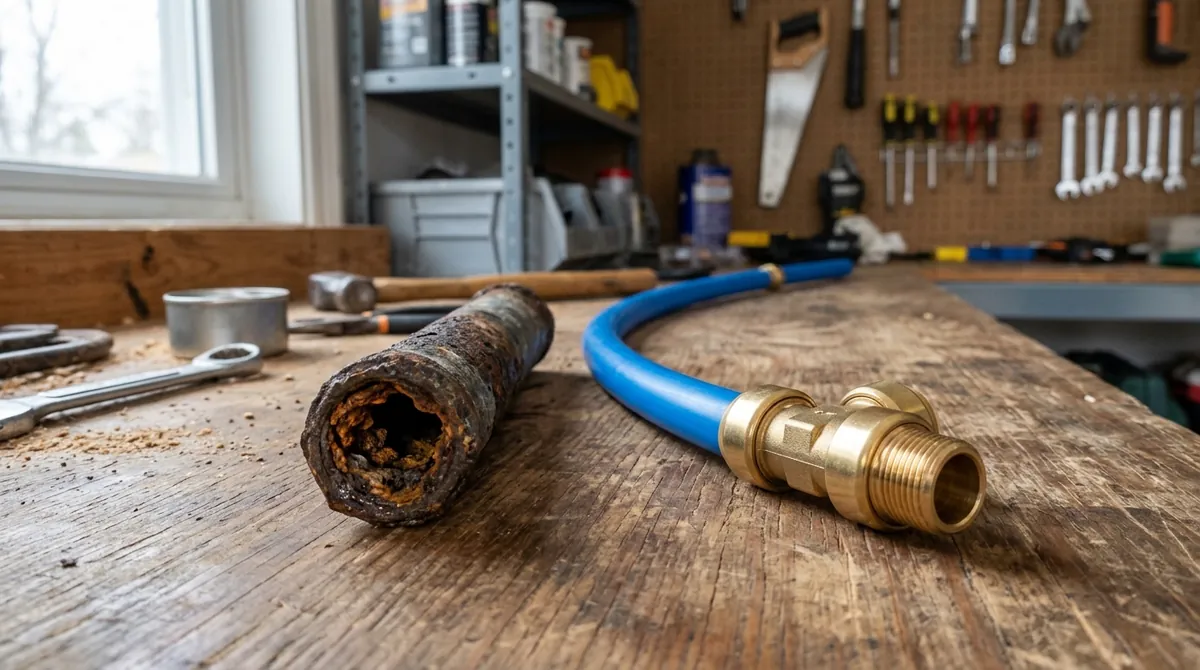
- Rusty or brown water at every tap. Older galvanized steel lines rust from the inside, which also narrows the pipe and drops pressure.
- Repeat repairs on the same line. A line that leaks again after it was patched is often cheaper to replace than to keep fixing.
If you're not sure the leak is in the water line, start with a leak detection visit. Our guide to signs of a hidden water leak explains the meter test step by step.
What Drives Water Line Replacement Cost
Every yard is different, so there isn't one honest price for every house. These are the things that move it.
Length of the line
A house close to the street needs a short run of new pipe. A home set far back from the meter, on a long lot or up a slope, needs more pipe and more time. Length is usually the biggest single factor.
Trenchless or trench
Whenever the ground allows, we replace the line through two small access holes, one near the meter and one near the house, and pull the new pipe through underground. That's often less work than opening the whole yard, and it leaves your lawn, plants and walkways mostly alone. Large rock, a crushed old pipe, tight turns or heavy roots can block that path. Then a trench is the right call, and we price it before any digging.
Depth and soil
Deeper lines take more digging at each access hole. Rock and big root systems take more time to work through than loose soil.
What's on top of it
A line under open lawn is the easy case. A driveway, patio, retaining wall or mature tree in the path adds work, because we either go around it, go under it or open it and put it back.
Access at both ends
How easy it is to reach the meter box and the point where the line enters the house matters. A crawlspace entry, a finished basement wall or a buried shutoff can add time.
What else turns up
Sometimes the old line isn't the only tired pipe. If the house still has galvanized supply pipe inside, or gray polybutylene pipe (common in homes built from about 1978 to 1995), we'll tell you, and price it separately so you can decide.
How We Price It
You get an upfront, flat-rate price with parts and labor included before any work begins. No hidden fees, and the price doesn't climb because the job took longer than planned. If we need to come out and diagnose the problem first, the $49 diagnostic fee is waived when you approve the repair.
A new water line is one of the bigger plumbing bills a homeowner faces, so financing through Wisetack is available for bigger jobs, subject to approval.
How Long the Job Takes
Typical times for our water line work:
| Step | Typical time |
|---|---|
| Locate the line, check pressure and find the leak | 1 to 2 hours |
| Trenchless replacement | 1 to 2 days, depending on length, depth and soil |
| Water off for the swap | A few hours |
In most cases we run the new line first and only shut the water off to connect it, so you're without water for a few hours, not days. We tell you ahead of time when that will be.
Repair or Replace the Whole Line?
A single leak on a newer line can be a spot repair. Replacement makes more sense when:
- The line is old galvanized steel. It rusts from the inside along its whole length, so fixing one spot leaves the rest still failing.
- It has leaked before. A second or third leak on the same line is a pattern.
- Pressure is low across the house and the old pipe is the cause.
- The yard is going to be opened anyway, for landscaping, a new driveway or sewer work, and the water line is old.
We find the cause first, so you pay for the right fix. Low pressure can also come from a failing pressure regulator or old pipes inside the walls, and those are different jobs. If the pipes inside the house are the problem, that's a whole-house repipe, and our repipe cost guide covers that side.
How to Compare Water Line Quotes
Two quotes can look far apart because they describe different jobs. Ask each plumber:
- Did you confirm the leak is in the water line? A pressure check and leak detection should come before a new line is recommended.
- Is it trenchless or a trench, and why? If trenchless is ruled out, ask what's blocking it.
- Is the price flat, with parts and labor included? Or is it hourly with an estimate?
- What's included at each end? Connection at the meter side, connection at the house, a new shutoff if the old one is seized, and putting the access holes back.
- What pipe are you putting in? Ask what material and why it suits your soil.
- How long will my water be off?
If Your Water Line Breaks at Night
Shut off the water at your main valve if you can find it. Then call us at (253) 600-1335. Phones are answered 24/7 by a real person, and we dispatch help as soon as possible. A night visit carries an after-hours fee, and you hear the full price before any work begins.
Get a Flat-Rate Water Line Price
Low pressure, a wet spot in the yard or a bill that won't come down? Call Rooter-Man Plumbing of Tacoma at (253) 600-1335 or send us a message. We'll find the line, confirm the problem and give you a flat price before any digging. Learn more about our water line replacement service for Tacoma, Puyallup, Lakewood, Federal Way and the rest of the South Sound.