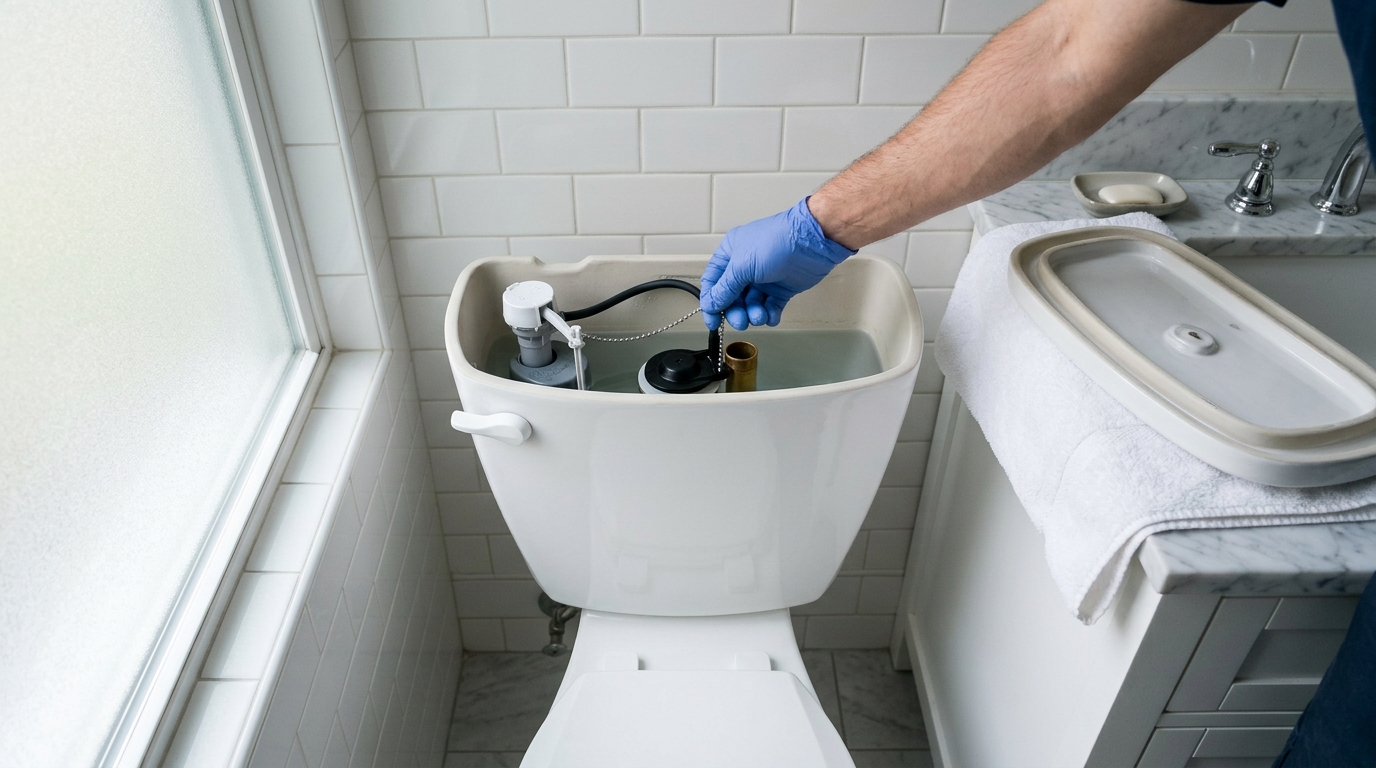
Repair your toilet when the bowl and tank are sound and only a part has worn out, such as the flapper, fill valve, handle or wax ring. Replace it when the china is cracked, it clogs again and again, or you're fixing it every few months.
Most toilet problems are a part, not the whole toilet. Below: the problems that are usually a quick repair, the signs that it's time for a new one, what each job involves and costs, and how to decide when it's a close call.
Toilet Problems That Are Usually a Repair
These are the calls we get most, and nearly all of them end with a new part, not a new toilet.
- It runs on its own. A worn flapper or fill valve lets water trickle from the tank into the bowl, and the tank keeps refilling. It's easy to ignore, but the U.S. EPA notes that a leaking toilet can "silently leak thousands of gallons a year." A new flapper or fill valve usually fixes it.
- The handle is loose or you have to jiggle it. A handle, lift arm or chain swap.
- It's slow to fill or makes a hissing sound. Usually the fill valve.
- It rocks. Often loose bolts or a shifted toilet on a worn wax ring. If caught early, it's a reset on a new wax ring.
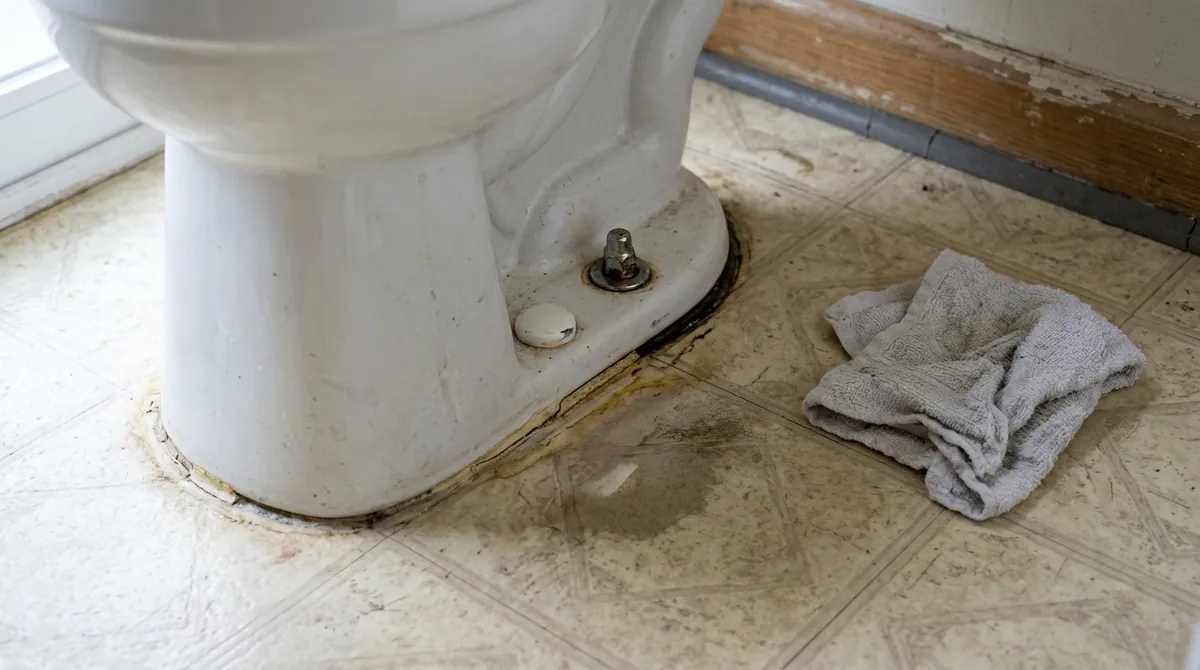
- Water at the base after flushing. Usually the wax ring under the toilet has failed. Fix it soon, before the subfloor goes soft.
- A clog the plunger won't clear. A toilet auger reaches through the bowl's curves without scratching it.
A typical toilet repair like a flapper, fill valve or handle takes us about an hour.
Signs It's Time to Replace the Toilet
Replacement starts to make sense when the problem is the toilet itself, not a part inside it.
- Cracked tank or bowl. A crack in the china can't be repaired reliably. Hairline cracks often seep slowly before they fail.
- It clogs again and again. If a toilet clogs often and the drain line checks out fine, the toilet's design or a buildup inside it may be the cause.
- Parts keep failing. A new flapper this spring, a fill valve this fall, a wax ring next year. When repairs stack up, a new toilet often costs less over time.
- Parts are hard to find. Some older toilets take odd-sized flappers or tank parts that are no longer made.
- It's an old, high-flow toilet. The EPA says "older, inefficient toilets" can use as much as 6 gallons per flush, while WaterSense labeled toilets use 1.28 gallons or less. If yours is old and the water bill matters to you, that's a reason to replace rather than keep repairing.
- You're updating the bathroom anyway. If the floor is coming up, it's the easiest time to swap the toilet and check the flange underneath.
What Each Job Involves
A toilet repair
We test the toilet, check for leaks around it and find the part that failed, not just the symptom. You get a flat price, then we swap the part, with new seals and a new supply line where the old ones are worn. We run it, check for drips and clean up.
A toilet replacement
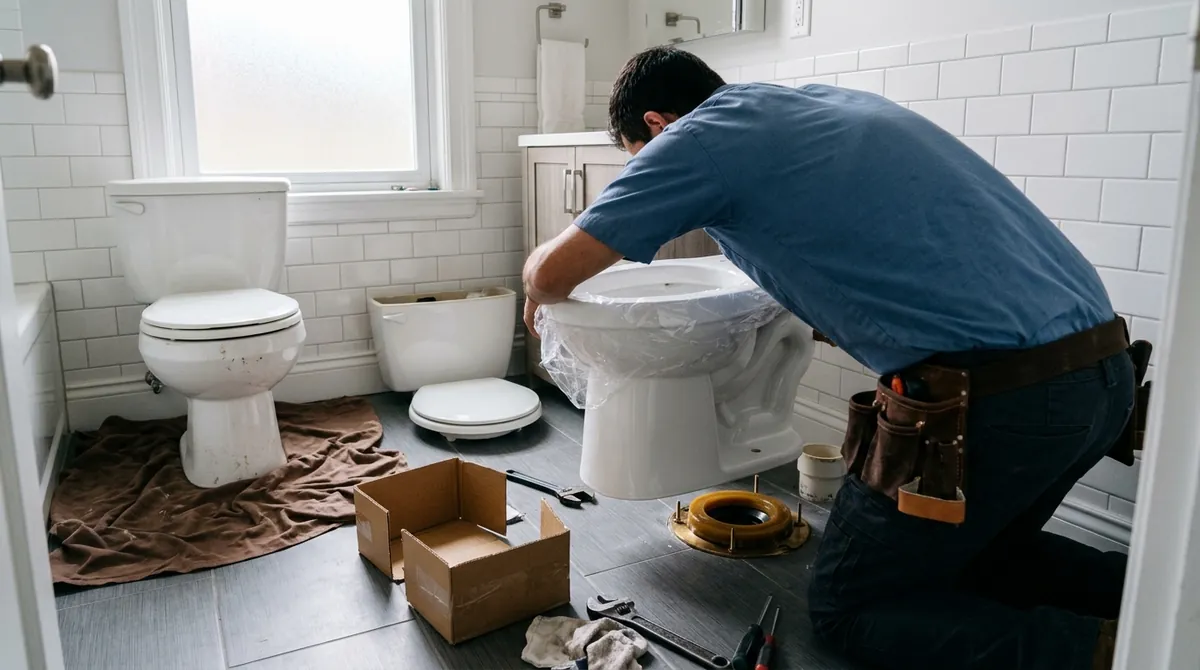
We remove the old toilet, check the flange and floor under it, set the new toilet on a fresh wax ring and connect a new supply line. Then we test for leaks and clean up. A typical replacement takes 2 to 3 hours, longer if the flange under the old toilet is damaged.
What Toilet Repair and Replacement Cost
Bathroom work is priced up front at a flat rate with parts and labor included, so you know the price before any work begins, with no hidden fees. If we need to diagnose the problem first, the $49 diagnostic fee is waived when you approve the repair.
What moves the price:
- Repair or replace. A new flapper costs far less than a new toilet. We show you both options when both make sense.
- The toilet you choose. If you're replacing, the new toilet's model and features change the total.
- The flange and floor. A broken flange or a soft subfloor from a long, slow leak adds work, and you hear about it before we start.
- Shutoff valves. An old, stuck shutoff may need replacing before we can safely work on the toilet.
- After-hours visits. A night visit carries an after-hours fee, and you hear the price first.
Repair or Replace: A Quick Rule of Thumb
| If the toilet... | We'd usually suggest |
|---|---|
| Runs, hisses, or the handle sticks | Repair the flapper, fill valve or handle |
| Leaks at the base but the floor is solid | Reset it on a new wax ring |
| Has a cracked tank or bowl | Replace |
| Clogs often and the drain line is clear | Replace |
| Needs its third repair in a year or two | Replace, usually |
| Is old, high-flow and you're updating the bathroom | Replace |
When it's a close call, we'll give you both prices and let you decide. We don't push a new toilet when a part will do.
Older Homes in Tacoma: What We Also Check
Many early 1900s homes in Tacoma's North End and Stadium District still have old galvanized supply lines and tight bathrooms, so a toilet swap can turn up a rusted shutoff or a narrow pipe behind it. On South Hill and in Lacey, many homes from the 1980s to 2000s are at the age when original toilets and their parts wear out. Homes from about 1978 to 1995 may also have gray polybutylene supply pipe. If we see it behind the toilet, we'll tell you.
A stain on the ceiling below a bathroom is worth a call even if the toilet seems fine. Water from a failed wax ring or supply line can travel a long way before it shows. Our leak detection service finds where it's coming from.
If the Problem Isn't the Toilet
If the toilet clogs and the tub or shower drains slowly too, or water comes up in the shower when you flush, the problem is probably farther down the line. That's a job for drain cleaning, not a new toilet, and our guide to the signs you need drain cleaning explains how to tell.
Get a Flat Price for Your Toilet
Running, rocking, leaking or clogging? Call Rooter-Man Plumbing of Tacoma at (253) 600-1335 or send us a message. A real person answers 24/7, and you get a flat price before any work begins. See our bathroom plumbing and toilet repair service for Tacoma, Puyallup, Lakewood and the rest of the South Sound.